

What if the story changes with you breaking the cycle?
“What defines you?
Nothing.
A definition excludes the possibility of change.”– Oscar Wilde
Have you ever asked yourself what you’re really searching for each day?
Proof of what? Evidence that you are… what, exactly?
You – the one who walks around carrying the belief of being the “bad apple,” doomed, never good enough. You who thinks life is only about suffering and surviving. You who believes old sayings like “like father, like son.” You who fears that you’ll bring bad luck to anyone who dares to love, see, or trust you.
Brené Brown, in Braving the Wilderness, writes: “Stop walking through the world looking for confirmation that you don’t belong. You will always find it because you’ve made that your mission. Stop scouring people’s faces for evidence that you’re not enough. You will always find it because you’ve made that your goal.”
But do you actually see yourself? The real you? The brilliant you?
Through both my own experience and my work with people, I’ve noticed one thing that shapes everything: the core beliefs running the show in our minds. That voice in the head. The internalized voice that decides whether we see ourselves as good, loving, capable – or as a doomed bad apple.
The real question is: Whose words are those in your head?
I won’t sugarcoat this. Awareness doesn’t come in a lightning strike. It comes slowly, step by step. And that’s okay. Each new phase needs time to settle in. The nervous system has to adjust. No matter what anyone says, change doesn’t happen overnight. Why? Because most of us were born into environments where survival was the only priority. Changing a core belief means rewiring the nervous system and reshaping the mind. That takes time, patience, and commitment.
Yes, change becomes possible when we consciously decide to do the work. But telling people to simply “choose differently” comes from a place of unexamined privilege – the privilege of being born into an environment where regulation, choice, and opportunity were available.
It’s easy to say “you’re one decision away from a different life.” It’s harder to live it. People in the self-development world often repeat: “Your inner reality is the only thing you can control.”
Sounds nice. But the truth is, the ability to “control” your inner reality only exists when there’s already some resource of safety, trust, and encouragement. When the nervous system is regulated enough to allow reflection, integration, and change. Each new level of awareness requires a different nervous system, a different you.
That’s why real growth starts with meeting people where they are, not where we think they should be. Change isn’t about forcing – it’s about allowing time and space for new beliefs to take root.
We are – at least, we’re supposed to be – the generation breaking the cycles our ancestors couldn’t. The ones processing what they were unable to. Not because they lacked willingness, but because they lacked the resources and the capacity.
Thing is… if you feel like your life sucks right now – it’s not really your life that sucks. It’s your relationship with your brain that sucks. The way we relate to our mind is part of our inner masculine energy – no matter of our gender. It’s our mindset. The core beliefs running the show in your head might be messed up, but you are not. It’s the way you’ve been taught to think about the world and yourself in it that’s broken – not you. You can always reclaim your authentic self.
Realizing this should be the fire that pushes us to change the narrative in our mind. Because building a loving relationship with your mind and your nervous system is the same as building a loving relationship with your life.
Imagine waking up curious, asking: How can I move closer to a different way of existing today? Imagine, looking around with open eyes, searching for people who think differently, who stretch your perspective, who spark conversations that feel like lightning in your veins.
Men need to sit with men who’ve healed their perspective of women. Women need to surround themselves with women who’ve healed their perspective of men. The conversations change, the energy changes. Love, appreciation, and respect deepen.
So, yes. Seek out the voices that help you rewire your mindset – podcasts, audio-books, workshops, courses. The tools are out there. Because here’s the truth: even if life starts to feel heavy again, you won’t label it as “my life sucks.” Instead you’ll notice how your response has shifted. You’ll see the gratitude inside the challenge. You’ll recognize that difficulties show up because you are capable of meeting them, not because life wants to break you.
When life feels hard, you’ll smile and remember: I have tools now. I’ve learned how to calm my fears and steer my wild mind. You’ll start to see the beauty in breathing into growth, in welcoming each new version of yourself.
And one more thing: if you consider yourself “self-aware” but only ever point out your flaws while ignoring everything you do well – that’s not self-awareness. That’s just cruelty toward yourself. And cruelty is far from being rooted in Love.
Let’s go back for a moment. Back to the root cause of every scattered mindset, every belief that whispers you’re broken.
So here you are, living your life… convinced you’ll never be good enough. Overworking, never satisfied with your performance. Laughing off or brushing away every compliment. Keeping your distance, trying to “protect” the one your heart longs for – from the bad apple you believe yourself to be. Running from those who might actually see your light, eager to reflect it back to you.
This is adult life. You might be in your thirties, forties, or older. And at some point, the Soul grows louder than the fear-based narrative of the Ego. At some point, the truth of the Heart demands to be heard.
You don’t fully understand it, but you feel it. A pull, a restlessness. A signal that it’s time to abandon the shallow surface and dive into the narrative running your mind. To really ask: Where am I? What have I done so far? What beliefs have been shaping my reality?
By a certain age, we’ve all touched love – or at least what we believed to be love. We’ve stumbled through losses, victories, heartbreaks, shame, confusion, rage. We’ve been tested by things no textbook could prepare us for.
And then, one day, you find yourself sitting in a coffee shop, surrounded by familiar faces. Co-workers. Friends, old or new. Doesn’t matter. You sit there, sipping, and a question creeps in: Why does it feel the same?
The faces are different, the jobs are different, the places are different – but the energy hasn’t changed. Stagnant. Frozen. Different people, same scenarios. Conversations echo the stories in your head. Everything outside reinforces the beliefs inside. Different context, same old message: You are trouble.
That’s when the conflict starts to stir. A small, unfamiliar feeling begins to rise: What if the story in my head isn’t true? What if all the labels I’ve worn for years aren’t me?
Hopefully, that question won’t let you go. Hopefully, it will haunt you – because inside, a new feeling is surfacing. A feeling, an ancient deep wisdom asking you to challenge what you’ve always believed about yourself. To push back against the narrative your environment keeps mirroring.
People might agree you are kind and loving at your core – but then tack on: difficult, arrogant, too sensitive, not smart enough. Every time they comment on your so-called “bad character,” something inside revolts. The Soul doesn’t buy it. It won’t accept the demonized version of your Ego.
You sit there, the sun warming your shoulders, and memories rise up like a kaleidoscope – flashes of words, scenes, situations all surfacing at once.
The voice.
The voice of someone your world once revolved around as a child. Mother, father, grandparent – whoever it was, you trusted them to know you and to know the world.
You sit with your coffee, watching a scene between a child and an adult at the next table. And suddenly, you’re pulled into another timeline. Your heart races as you hear the echo of that old voice warning parents of your new classmates that you’re a bit wild, and they should be cautious around with you. You know, he’s a boy… has a difficult nature
You remember family events where the voice silenced relatives who wanted to tell you how much you’d grown, how beautiful you’d become: Don’t say that – the voice said, it will make her arrogant. She has a difficult nature.
College comes. A new city, a dorm, new teachers. And still the voice travels with just to ask the teacher “Treat him strictly. He has a difficult nature.”
When girls start to show interest in him, the voice steps in, warns and sends them away, saying : “You’d be better off with someone else.” He has a difficult nature.
When her body begins to change, when curves mark the beginning of her unique beauty, the voice “jokes”: “Better watch her. You know you can’t trust girls.”
At family celebrations, the voice finds a way to provoke fights, pushing until the temper breaks – then sits back triumphantly: “See? His difficult nature. Just like his father.”
And the truth is, this happens more often than we want to admit. Behind those “well-intended” comments hide unresolved anger, unprocessed shame, and pain disguised as care. Projected from generation to generation.
No child develops a “difficult nature” unless that’s what they are told to be, again and again, by the very people who were supposed to say: “Become, my little soul! Bloom in your greatness. May you live long and happily in this world. I love you, just as you are.”
It can take months of gentle, supportive conversations before someone even begins to grasp the weight of what was done to them. At first, we are utterly convinced of the righteousness of that internalized voice, pointing to endless stories that “prove it true.” It’s hard work to believe in ourselves, to believe in our worth. But the breakthrough comes when we finally reach the anger we should have felt long ago. With anger comes grief, loss, and shame.
We begin to long for acknowledgment – for that voice, whoever it belonged to, to admit what it did. Slowly, we piece together the truth: that those words were not born from us, but inherited by them. Passed down, endured, and then handed over again. That voice became the foundation of untrue beliefs carried across generations. And yet, knowing this gives us something powerful: choice. Free will. The chance to end it by liberating ourselves.
The tragic details of our parents’ childhoods begin to explain the pain they projected onto us. And we finally see – we are not doomed. We can choose differently. We can release the fear of becoming like our father. We can release the shame of being called “easy” just for having a body. When we realize the voice in our head was never really ours, we start building a new foundation. One made of love, support, trust, and faith. Then the Soul can finally lead us back to ourselves. And we stand in awe, discovering how beautiful we truly are.
The old voices fade. The heart opens. And we dare to believe that our dreams are not too big, our love is not cursed, and our choice to change the narrative will ripple out to those we love. Time shows us: Love heals. Love finds the right words. And Love brings families together in ways they never were before.
You can reach me here: E-mail: annnna06@gmail.com
Anna Kónya. Tirana. 09.28.2025
© 2025 Anna Kónya. All rights reserved. Content may not be copied or reproduced without permission.
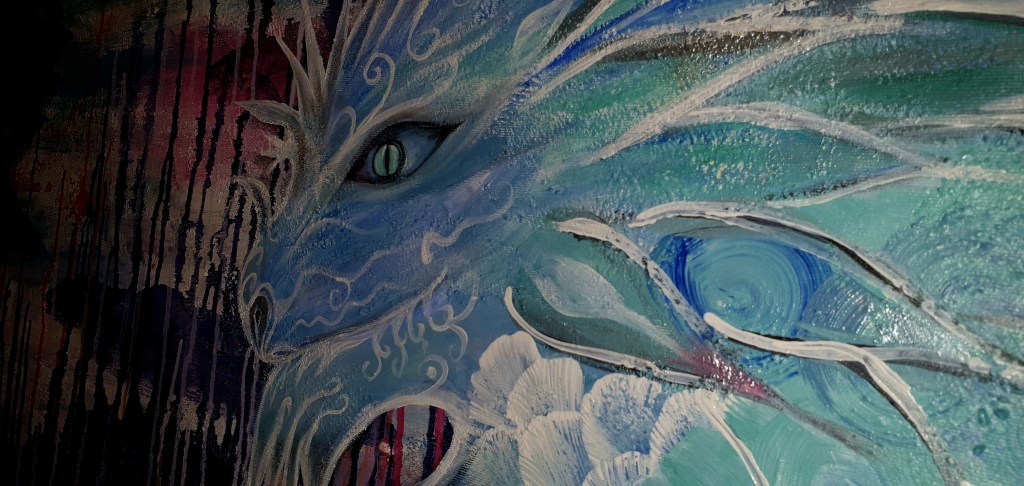
 Anna Kónya Art